Stop renting the capability to change and start building something that lasts.
EXPLORE SERVICESEvery organization has an operating model—the patterns, structures, and habits that shape how decisions get made, how information flows, and how people coordinate. Most organizations can redesign their products, their strategies, even their brands. But they can't redesign themselves. When the way they work stops fitting the reality they face, they have no mechanism to adapt.
The typical response is to hire consultants or launch a transformation program. Sometimes that's necessary. But it reinforces a deeper problem: the organization never develops its own capacity to evolve. Every few years, the same cycle repeats—new leadership, new initiative, new deck, same underlying constraint.
Deliberate Works exists to break that cycle. The focus isn't on delivering a better reorganization from the outside. It's on helping organizations build a permanent, internal capability to sense what's not working, design better ways of operating, and iterate continuously—without waiting for the next crisis or the next consultant.
The premise is simple: the ability to change how you work is itself a skill. And like any skill, it can be developed, practiced, and embedded inside the organization where it belongs.
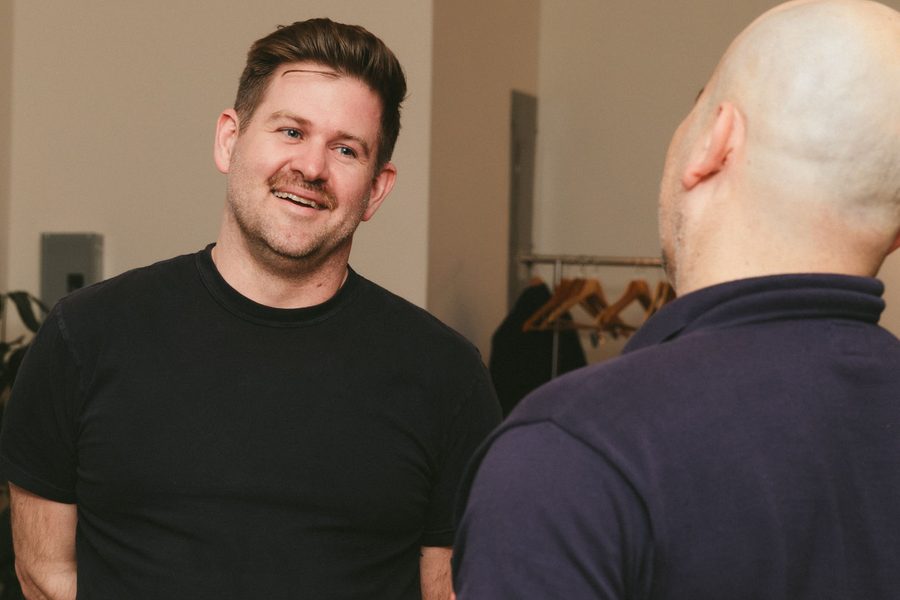
Deliberate Works is led by Sam Spurlin, an organization designer with over a decade of experience helping executive teams change how their organizations actually operate. He has led transformation work for global companies and coached senior leaders through complex structural and strategic challenges. That experience revealed a recurring pattern: even the best external interventions rarely stick, because the organization never develops the internal muscle to continue the work.
That insight is the foundation of Deliberate Works. Sam's approach centers on transferring the capability to evolve—not just delivering recommendations, but building the sensing, designing, and iterating skills inside the organization itself. His background in positive psychology and systems thinking informs a practice oriented toward making organizations more adaptive, more humane, and less dependent on outside help to navigate complexity.
Most organizations outsource their own evolution. When something isn't working—decision-making is too slow, coordination is breaking down, strategy isn't translating into action—the instinct is to bring in outside help. That can be valuable. But it doesn't solve the underlying problem: the organization has no internal function dedicated to continuously improving how it operates.
Deliberate Works offers several ways to close that gap, each designed to leave your organization more capable than before:
Organizational judgment for leaders navigating consequential decisions.
Some decisions can't wait for a full engagement. Leaders facing structural questions, strategic ambiguity, or organizational friction need a thinking partner with deep pattern recognition—not another framework or slide deck.
This advisory relationship focuses on the specific decisions and dynamics that matter most right now. The orientation is always toward building the leader's own judgment about how their organization works, not creating ongoing dependency.
This is not coaching. It is not facilitation. It is experienced organizational judgment applied in real time.
Build a permanent internal capability to evolve how your organization works.
Most transformation efforts fail for the same reason: they live outside the organization. Consultants leave. The initiative winds down. And the organization reverts, because it never developed its own capacity to keep evolving.
This engagement is designed to do the opposite. Deliberate Works embeds as a fractional Org Design leadership function—not to deliver a reorganization, but to help your organization build something like an internal innovation lab focused on itself. The goal is a permanent capability that can sense what's not working, design targeted changes, and iterate continuously.
Think of it as three modes of work operating in parallel: research and sensing (understanding how the organization actually functions), testing and design (running focused experiments), and development and iteration (scaling what works and retiring what doesn't). Over time, this produces a compounding portfolio of better practices, clearer structures, and stronger internal judgment about how to adapt.
A repeatable cadence your leadership team can own and evolve.
Many leadership teams do strategy once a year and then spend the rest of the year reacting. The problem isn't the strategy—it's that no rhythm exists to revisit, pressure-test, and adapt it as reality shifts.
This engagement installs a deliberate strategy cadence—typically four sessions per year—with the preparation, facilitation, synthesis, and follow-through handled initially, then progressively transferred so the leadership team can run it independently.
Understand how your organization actually operates—and where the trapped energy is.
Before an organization can build the capability to evolve, it needs to see itself clearly. This diagnostic maps how decisions actually get made, where coordination friction is draining energy, and which structural patterns are silently shaping behavior.
The output isn't a static set of recommendations. It's a prioritized backlog of targeted changes—designed to be run as experiments your team can own, not a consulting deliverable that sits on a shelf.
Deliberate Works helps organizations build the internal capability to evolve—so the next time something needs to change, your organization can do it itself.
Interested in exploring what this could look like? Reach out to start a conversation.